Crime & Safety
NYT Reporter Who Authored Kai Spears Story Testifies In Defamation Trial
Here's our extensive courtroom coverage from the fourth day of the defamation trial brought against the NYT by a former UA basketball player


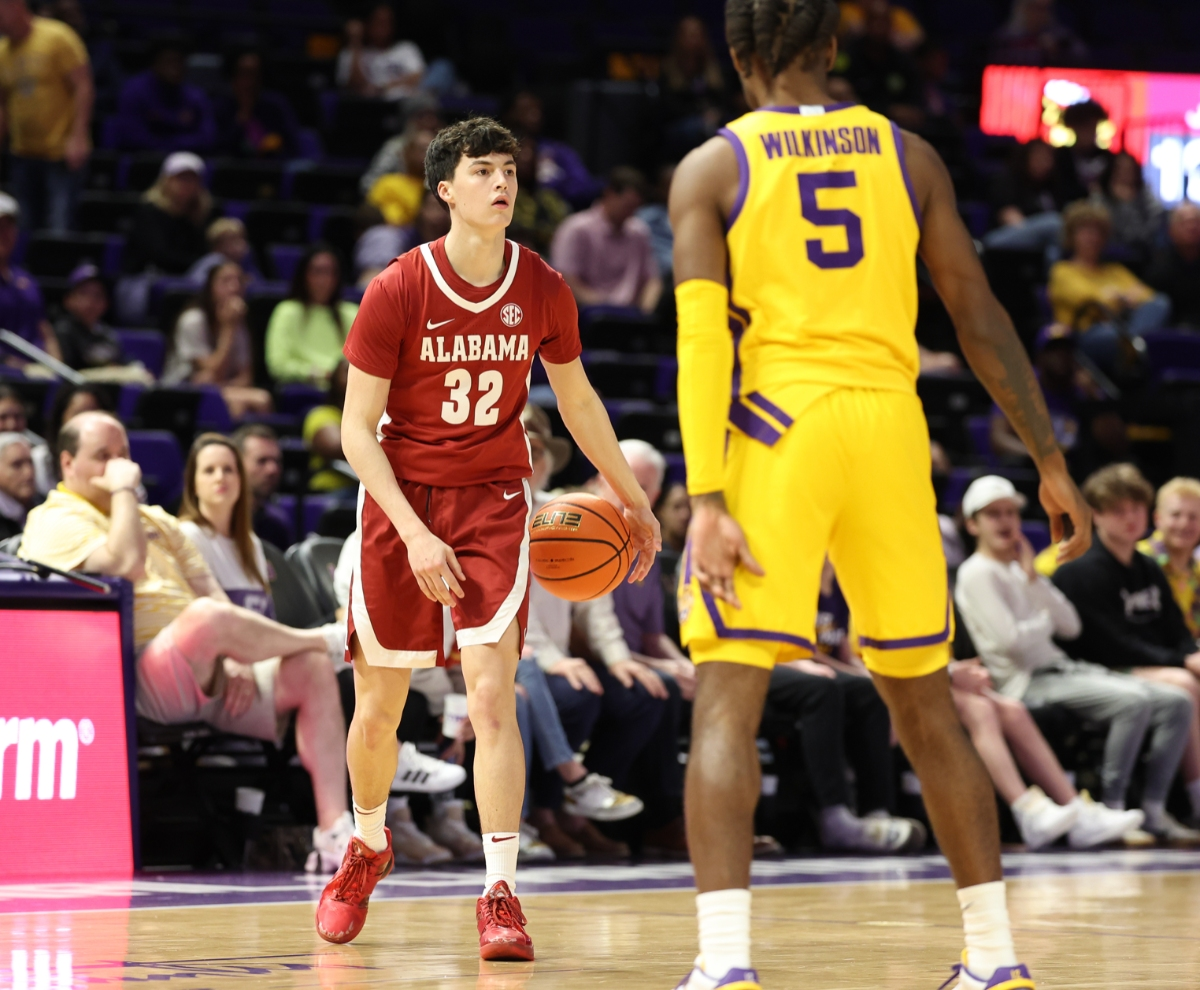
TUSCALOOSA, AL — Jurors heard more than two hours of testimony Thursday from the New York Times reporter who published a story in 2023 that erroneously placed a University of Alabama basketball walk-on at the scene of a deadly shooting near the Tuscaloosa Strip.
Click here to subscribe to our free daily newsletter and breaking news alerts.
The story in question, as Patch previously reported, was authored by New York Times sportswriter Billy Witz on March 15, 2023, and published ahead of the Crimson Tide's NCAA Men's Basketball Tournament opener against Texas A&M Corpus Christi the following day in Birmingham.
Find out what's happening in Tuscaloosafor free with the latest updates from Patch.
Witz's reporting contented that freshman walk-on Kai Spears had been in the passenger seat of Crimson Tide basketball star Brandon Miller's car when the vehicle was struck by gunfire during a shootout on Grace Street that left 23-year-old Jamea Harris dead in the early morning hours on Jan. 15, 2023.
Witz's article netted over 200,000 online page views during its short life, in addition to countless times in print, before an official correction was eventually published by the newspaper in June 2023.
Find out what's happening in Tuscaloosafor free with the latest updates from Patch.
Following the publication of the story, the truth quickly emerged that the individual in the passenger seat was Crimson Tide basketball manager Cooper Lee.
In the wake of the factually inaccurate story, Spears' family filed a civil lawsuit against the New York Times for defamation and false light/invasion of privacy, which made it to trial in federal court beginning on Monday.
Witz was the third and final witness called to the stand Thursday, under the agreed-upon stipulation that the legal team for the New York Times would be the first to question him.
Witz spoke at length to the jury about his background and professional evolution in journalism before saying he began freelancing for the New York Times in 2008 and was eventually assigned to cover college sports in 2019.
Following the shooting that saw former Crimson Tide forward Darius Miles charged with capital murder and amidst the Alabama men's basketball program's most successful season in program history, Witz said he and his deputy sports editor Oskar Garcia set out to tell the story of how the team was coping with tragedy while handling unprecedented success.
"It's not something that happens every day," Witz said on the stand.
Witz testified that around the time he set off for Nashville to cover the 2023 Southeastern Conference Basketball Tournament, he contacted the New York Times' research department to begin asking for relevant contact information for those associated with the Crimson Tide men's basketball program.
Witz went on to say the tension around the developing story was "ramped up" when Miller's tangential involvement in the shooting came to light during the preliminary hearing for Miles and his co-defendant, Michael Lynn Davis, in the Tuscaloosa County Jail on Feb. 21, 2023.
"Because we hadn't written anything, we wanted to lay out the scene," Witz said, explaining that the story was intended for those readers who might not be sports fans.
After his trip to Nashville to see the Crimson Tide win the conference tournament, Witz testified that he might have written "elements" of the story that would become the center of the present defamation trial, but said the Spears' angle had not yet "crystalized."
Still, it was also during the SEC Tournament when Witz first met Crimson Tide basketball coach Nate Oats.
Regarding this informal exchange in Nashville in early March 2023, Witz testified Oats seemed "open" to having a conversation about the over-arching storyline shrouding the season but was not sure if the administrators in the UA Athletic Department would let the coach speak about it on the record and Witz was referred to a sports information director.
During a pause in establishing the timeline, Witz testified he felt confident that he had identified Spears as the passenger in Miller's vehicle at the time of the shooting.
"Yes, [the story] had a mistake, no question," he said.
Returning to the testimonial timeline of the story's development, Witz said he flew into Birmingham the morning of Tuesday, March 14, 2023, rented a car and immediately drove to Tuscaloosa to begin reporting on a story ahead of the Crimson Tide's NCAA Tournament opener on the upcoming Thursday.
Witz testified he made his way to the Tuscaloosa County Courthouse, walked the scene of the shooting on Grace Street, spoke with officials from the Tuscaloosa Police Department and reached out to Tuscaloosa Mayor Walt Maddox.
The morning of Wednesday, March 15, 2023, however, would prove a fateful one as he had his first meeting with the lone anonymous source used to inform his story about Spears.
As Patch reported throughout the course of the trial, "Source A" is the individual whose information convinced Witz that it was indeed Spears in the passenger seat of Miller's car when the shots rang out.
A secondary background source, referred to in proceedings as "Source B," was the individual who first pointed out to Witz that someone else had been in the car with Miller in the early morning hours of Jan. 15, 2023.
On the stand, Witz described Source A as a "high-level person, professional. ... [It was] very easy to understand why that person would not want their name public" as it relates to the ongoing criminal investigation.
This source also had access to still photos of the impound lot where Miller's car and Harris' Jeep were being held, along with surveillance video of the shooting and a transcript from the preliminary hearing for Davis and Miles the previous February.
During this point in the testimony, the court was shown the videos Witz had viewed, which depicted both the shooting in question and the scramble of vehicles trying to make their way out of the narrow side street after shots had been fired.
In one video, the car driven by former Tide basketball player Jaden Bradley can be seen turning right onto University Boulevard (or The Strip) at a high rate of speed, followed by the Jeep driven by Harris' boyfriend Cedric Johnson turning left, and then Miller's car following the same initial route as Bradley by turning right.
At no point in the videos shown to the court can any of the occupants be seen in Miller's car.
"My first thought immediately was 'these guys [in Miller's car] had to be under the dashboard to not get hit,'" Witz said of the still photo from the TPD impound lot offered to the court showing bullet holes in the windshield of Miller's car.
Still, when meeting with Source A on the morning of March 15, 2023, Witz said talk turned back to who was in the vehicle with Miller during the shooting.
Objectively speaking, Miller was the one-and-done star of the Crimson Tide basketball team and on every projected draft board as an eventual top-5 pick in the upcoming NBA Draft that saw the versatile talent taken with the second-overall pick by the Charlotte Hornets.
Miller's involvement would prove the catalyst that turned a regional story into a matter worthy of national attention.
After being told by Source A that the lead investigator on the case, Branden Culpepper, said during the preliminary hearing that he couldn't recall who was in Miller's passenger seat, Witz told the jury that Source A told him "I know who that was."
"So that basically started the line of questioning," Witz testified, before going on to explain that he pushed Source A about why it would be a good idea to tell him who the individual was.
During this meeting, he testified, he pulled up the Alabama basketball roster and scrolled through it until Source A pointed to Spears.
"I think the way I was looking at it, Source A, by their job title and by virtue of their access to the transcript, videos and impound photos, was somebody who knew a lot about this case," Witz said. "In my mind, the story had a focus and this tragedy, as bad as it was, could have been much worse.
"It was terrifying for me to watch [the video of the shooting]," he added. "I can't even imagine."
Following this testimony, the jury was once again played the three audio clips of Witz attempting to get comments from Spears, Miller and Oats during an open locker room media availability in Birmingham's Legacy Arena ahead of the Crimson Tide's tournament opener.
Witz testified that he walked into that locker room with "empathy" and approached the story with "trepidation."
He also said his perceived threat to ask Oats about the "sensitive information" during a televised postgame press conference after being denied a private meeting had been done in good faith.
"I was trying to lay out that this was a sensitive issue," he said. "This is a sensitive topic and this would have been no different than when I approached Coach Oats after the SEC Championship."
To underscore his point, he testified that he had a similar conversation with then-Auburn head basketball coach Bruce Pearl about a player who'd had issues with weapons prior to his time on the Plains.
Nevertheless, around 1 p.m. on the day the story was published, Witz said he was convinced his information was accurate and on the drive back to Birmingham after meeting with Source A earlier that morning, he communicated with the New York Times research department to get contact information to help nail down the Spears' angle.
And it was the Times' research department, he said, that discovered Spears' father, Christian Spears, was the present athletic director at Marshall University.
As Patch previously reported, this prompted Witz to begin reaching out to sources like Christian Spears, the UA athletic department, local law enforcement and other sources in the hopes of getting final confirmation for a story without a hard deadline.
But he hit a dead end, with Christian Spears testifying Thursday that he did not view the request as urgent because his son had already been cleared of any involvement.
Testimony then briefly turned to "Source B" — described by Witz as "a more restrictive arrangement" that was "tilted more toward off of the record."
It has been well-established at trial that Source B was the individual who first nudged Witz to the fact that someone else was in the car with Miller at the time of the shooting.
What's more, Source B was described by the reporter as another person who was at a "high level" and who had access to knowledge about the case that not many others would have.
Witz testified he talked to Source B for around 10 minutes on the day the story was published and when he told the source the New York Times was looking into Spears, Source B responded: "I can tell you it's a white guy on the basketball team, I just don't remember his name."
It was at this point, according to his testimony, that Witz reached out again to Source A for corroboration but did not get an answer to his call, leaving him with no recourse but to leave a voicemail.
And after telling the jury about not getting anything else from local law enforcement, proceedings ended for the day and court was adjourned until Friday morning, when Witz's testimony is expected to resume.
'It Was A Bad Question'
Witz on the witness stand overshadowed much of the prior proceedings during the day, which offered additional insight into the standards and practices of the newspaper.
After Christian Spears wrapped up his testimony following a cross-examination where the New York Times' legal team worked to impeach his credibility as it related his interactions with his son and his response to the newspaper's inquiries, the Spears' team qualified its own journalistic standards expert to testify in what would become a brief, but contentious, chapter of the trial.
Veteran journalist and University of Alabama journalism instructor Mark Mayfield has been on retainer for the plaintiff's side since 2024 and sat on the witness stand for a large part of Thursday's proceedings to provide his analysis of the coverage by the New York Times.
A seasoned journalist and author of six books who was noted for using anonymous sources in his exclusive coverage of the Atlanta Child Murders in the late 1970s and early 1980s for United Press International (UPI), Mayfield made it clear in his testimony that, while he had tremendous respect for the New York Times' established standards, the newspaper fell well-short of meeting its own guidelines as they relate to the story in question.
This testimony included Mayfield's view that the Times failed to verify the information provided by its primary source before the story was published, resulting in a "rushed investigation" on an "artificial deadline," despite it being public knowledge that there had been a passenger in Miller's vehicle since the preliminary hearing on Feb. 21, 2023.
Along with speaking at length about the Society of Professional Journalists Code of Ethics, he also cited the newspaper's own standards in testifying that an anonymous source should be a "last resort."
"The primary news element hung on one anonymous source," Mayfield told the jury, before pointing out that the source of Witz's "sensitive information" was not given attribution in the story until the 11th paragraph.
But it was during cross-examination by the New York Times legal team that tempers began to flare when Mayfield was questioned about the professionalism of Witz's approach during the open locker room media availability ahead of the NCAA Tournament opener.
After an extended back-and-forth dialogue that saw attorney Michael L. Bell of Birmingham's Lightfoot, Franklin & White point fingers and raise his voice, Mayfield gave a flat opinion to the court.
"It was a bad question," he responded loudly when discussing Witz asking Spears what it was like being in the car at the time of the shooting during that locker room interaction in Birmingham.
Attorney Matt Glover, one of the lawyers representing Spears on behalf of Tuscaloosa's Prince Glover Hayes, then objected, saying Bell was harassing the witness — an objection that was sustained by U.S. District Court Judge Annemarie Carney Axon.
Judge Axon was measured when she sustained the objection but gave a clear directive to Bell after excusing the jury for a brief respite.
"You will not treat a witness like that in my courtroom again."
Testimony will resume Friday morning at the Richard Shelby Federal Building and Courthouse.
Have a news tip or suggestion on how I can improve Tuscaloosa Patch? Maybe you're interested in having your business become one of the latest sponsors for Tuscaloosa Patch? Email all inquiries to me at ryan.phillips@patch.com
Get more local news delivered straight to your inbox. Sign up for free Patch newsletters and alerts.