Rancho Mirage, CA|Featured Classified|Announcement|

That Leg Pain May Not Just Be "Just Getting Older"

September is Peripheral Artery Disease Awareness Month, and board-certified vascular surgeon Dr. Pushpinder Sivia is urging Americans to pay attention to leg and foot symptoms that may be the body’s version of a warning light.
Leg pain is easy to brush off. Maybe it is arthritis. Maybe you walked too much. Maybe you are simply getting older.
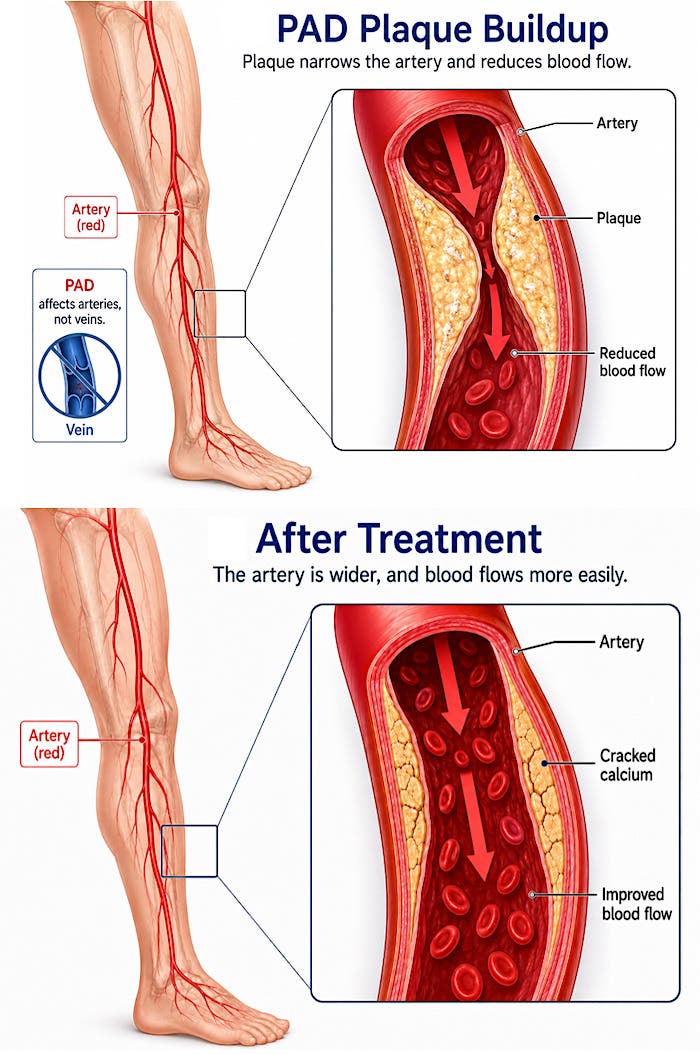
But pain that repeatedly appears while walking and improves with rest can be a sign of peripheral artery disease, or PAD, in which narrowed arteries reduce blood flow to the legs.
More than 400 amputations occur every day in the United States as a result of PAD. An estimated 10 to 12 million Americans over age 40 have the disease, and many do not know it.
“PAD is easy to miss because the symptoms can seem so ordinary,” says Dr. Pushpinder Sivia, of Empire Vein & Vascular Specialists. “People blame arthritis, age or a muscle problem. But when the same symptoms keep happening with activity and improve with rest, that pattern matters.”
The legs can act like the body’s check-engine light: the warning may appear there even though the underlying problem involves circulation more broadly.
The Leg Pain That Should Get Your Attention
A classic sign of PAD is pain, cramping, aching, heaviness or fatigue in the calf, thigh or buttock that appears while walking and improves with rest.
When you walk, your muscles need more blood. If an artery is narrowed, blood flow may not keep up. When you stop, demand falls and the discomfort improves.
Other signs include one foot feeling colder, numbness or weakness, skin color changes, reduced hair growth, a slow-healing sore, or foot or leg pain at rest.
PAD Is Not Just About Your Legs
PAD is usually caused by atherosclerosis, the buildup of plaque inside the arteries. That same process can affect arteries supplying the heart and brain, raising the risk of heart attack and stroke.
Who Should Pay Extra Attention?
Risk is higher among people who smoke or used to smoke, have diabetes, high blood pressure, high cholesterol, kidney disease, heart or vascular disease, or are over age 50 with other risk factors.
Black adults have higher PAD rates and amputation risk, while underserved communities may face delays in diagnosis.
Take Off Your Socks
Take off your socks and look at your feet. Is one foot colder? Has the skin changed color? Is there a sore that will not heal? Do your calves hurt when you walk and improve when you stop?
The Test Can Be Surprisingly Simple
Checking for PAD may begin with an ankle-brachial index, or ABI, which compares blood pressure at the ankle with blood pressure in the arm. A significant difference can suggest reduced blood flow.
What Happens If PAD Is Found?
Treatment depends on severity. It may include exercise, smoking cessation, risk-factor control and medication.
Some patients may need angioplasty, stents, plaque-removal devices or intravascular lithotripsy (IVL), which uses sonic pressure waves to open calcium-hardened arteries.
Don’t Ignore the Warning Light
“Your legs can give you an early warning that there may be a circulation problem,” Dr. Sivia says. “The important thing is not to keep dismissing the same warning over and over.”
During PAD Awareness Month, pay attention to the pattern. Look at your feet. Notice what happens when you walk. And if something keeps feeling wrong, get it checked.
We would never keep driving for months with the check-engine light on. We should not do it with our bodies, either.
For more information or to schedule a consultation, visit EmpireVein.com or call 1-888-263-7167.
Empire Vein & Vascular Specialists is located in Rancho Mirage, La Quinta, Palm Springs, Riverside, Ontario and Victorville.