Arts & Entertainment
‘Fuze’ Review: Aaron Taylor‑Johnson Anchors A Precision‑Built Thriller Undercut By Pulp Instincts
David Mackenzie blends procedural precision with pulpier impulses in a tense London thriller elevated by sharp, electric performances.


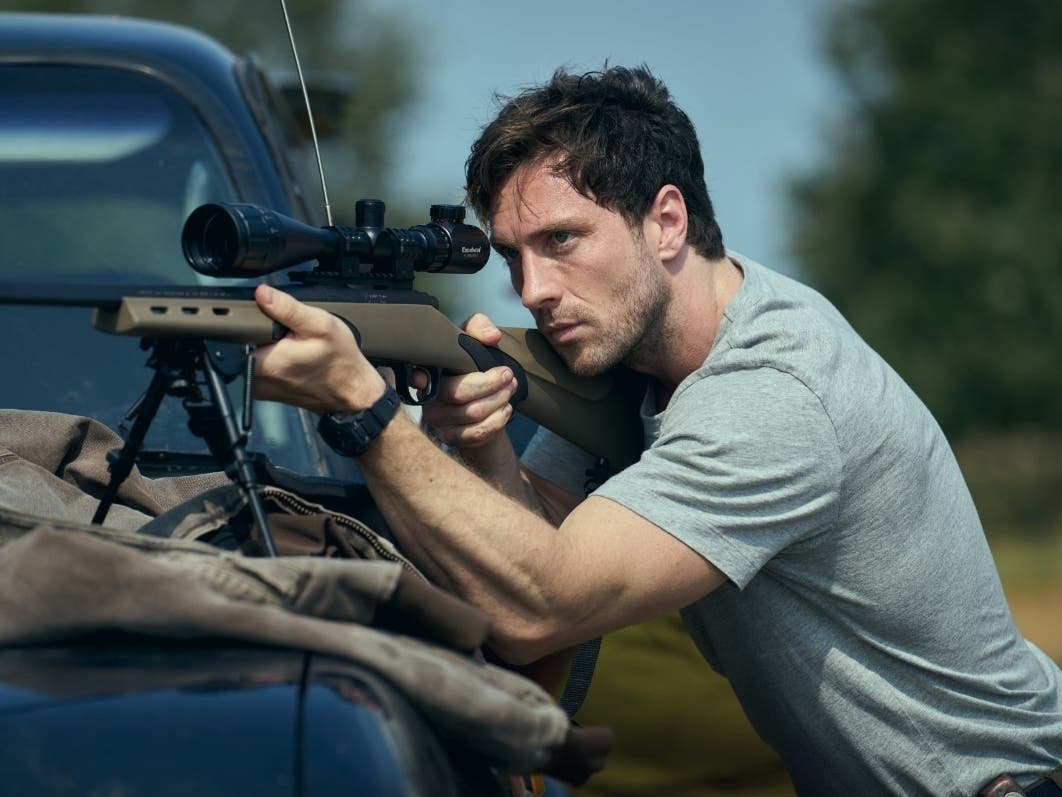
LOS ANGELES, CA — A bomb threat sparks David Mackenzie’s “Fuze,” a high‑concept thriller where the illusion of control clouds perception, where visibility obscures, and where the past collides with the present. Echoing the grit of 1970s heist cinema, the film favors restraint over spectacle and tension over noise, unfolding with a hard, pulse‑tight urgency in which every glance, every gesture, every movement becomes a race against time.
Mackenzie threads “Fuze” with the same procedural rigor he brought to “Relay” — the clipped exchanges, the focus on process, the way tension accumulates under pressure. But here he channels that rigor into a pulpier register.
What begins as a bomb threat unfurls into a meticulously timed heist. Two operations flow in tandem — a precision that eventually buckles under the film’s pulpier ambitions.
Find out what's happening in Los Angelesfor free with the latest updates from Patch.
From the outset, the movie snaps into panic. A 500-lb WWII bomb is discovered. Central London is jolted into paralysis. A street is cordoned-off. Residents rush out. Sirens blare in the distance. Lights flash. The city holds its breath.
At the center of it all is Major Will Tranter (Aaron Taylor-Johnson), the bomb-disposal specialist called in to neutralize the antique device. Meanwhile, Chief Superintendent Zuzana (Gugu Mbatha-Raw) oversees the widening emergency from a secure operations room, her wall of monitors tracking a city suddenly forced into turmoil.
Find out what's happening in Los Angelesfor free with the latest updates from Patch.
Elsewhere, gang members Karalis (Theo James), X (Sam Worthington), and their crew slip into a nearby bank, exploiting the crisis as cover. They use a recently evacuated flat as their staging ground, tunneling toward the vault through the emptied zone — a move that will soon collide with the bomb operation unfolding above.
As the narrative threads tighten, the performances step in to steady the film whenever its pulpier flourishes wobble. Taylor-Johnson brings a clenched, almost flinty intensity to Tranter, his eyes flicking across the bomb’s corroded shell, his face slick with sweat as the timer ticks in the quiet. James, meanwhile, leans into Karalis with sharp-tongued relish, his South African accent slicing through each line, revealing a man coiled in menace.
Mbatha-Raw, by contrast, plays Zuzana with a cool, no-nonsense authority, her steadiness grounding the film’s procedural spine and giving the chaos around her a necessary counterweight. Together, the trio lends the film a stabilizing human presence — performances that buoy “Fuze” even when the storytelling strains under its own ambition.
Visually, “Fuze” carries a cool, unadorned precision. The cinematography favors tight, functional compositions and a muted palette that mirrors the film’s procedural temperament, while the editing moves with a clipped, Soderberghian rhythm — clean, unfussy, and always in service of momentum. Mackenzie isn’t chasing style so much as control, and the film’s visual grammar reflects that discipline even when the narrative wobbles.
But that discipline only holds for so long. The very pulpy impulses and feints that make “Fuze” tick also undercut its otherwise immaculate procedural rigor. Nowhere is this more evident than in the final stretch, where the film grows increasingly desperate to knot every thread, leaning on hackneyed devices and abrupt pivots that blunt the precision Mackenzie has so carefully built.
In effect, the climax falters at the very moment the film’s meticulous construction should pay off — a stumble that tempers the film’s momentum.
Ultimately,“Fuze”settles into a gripping heist thriller built on precision and propulsion, even as the strain in its clockwork construction makes the limits of its pulpier ambitions impossible to ignore.
The performances — taut, grounded, unwavering — give the film a steadiness that its pulpier instincts can’t always muster, reminding us that human presence, not spectacle, is what truly generates the pulse.
Get more local news delivered straight to your inbox. Sign up for free Patch newsletters and alerts.