Community Corner
HB 803 Eliminates Building Permits for Some South Florida Home Projects — But Not These
Understanding the limitations of this new law is key to knowing when to pull a building permit when planning a minor project.
This is a paid post contributed by a Patch Community Partner. The views expressed in this post are the author's own, and the information presented has not been verified by Patch.
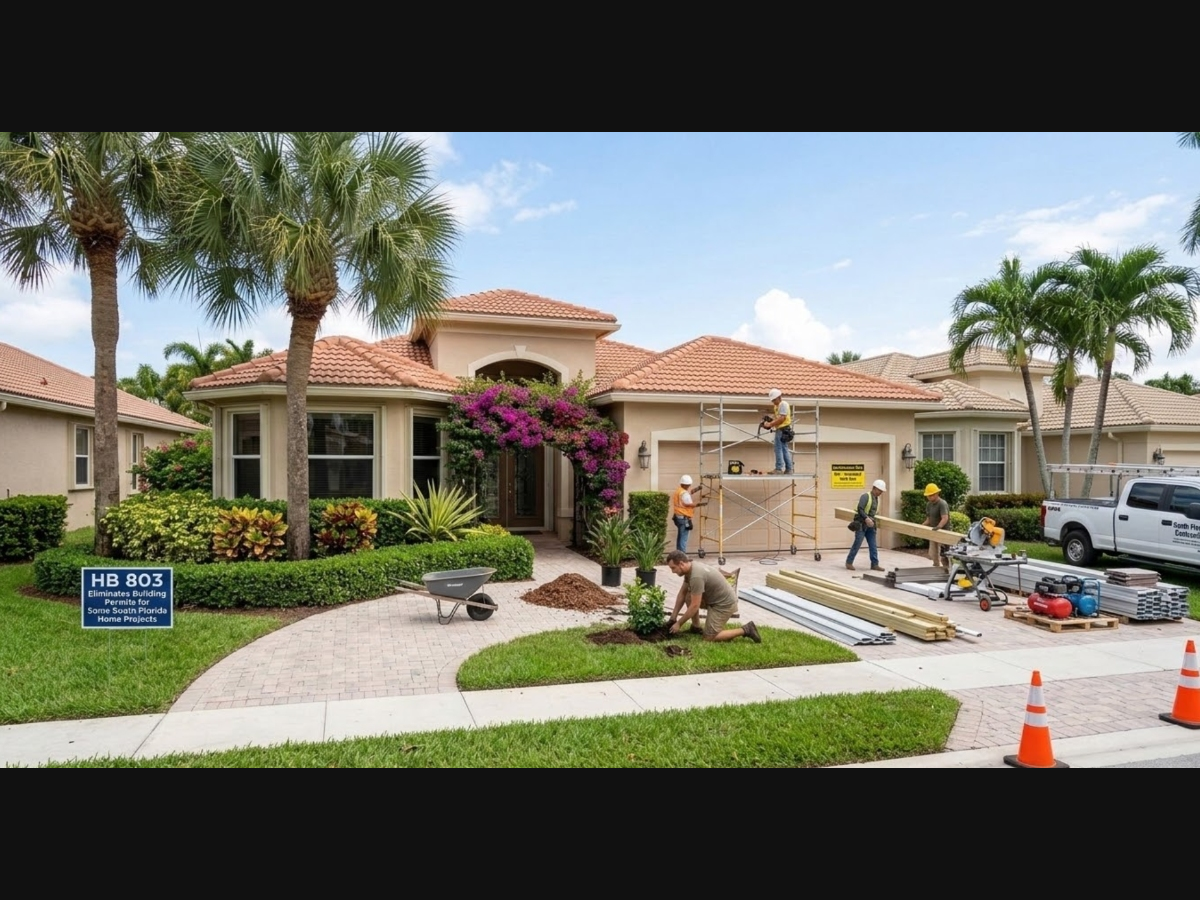
On June 5, 2026, Governor Ron DeSantis approved Florida House Bill (HB) 803, introducing new permit exemptions for South Florida home improvement projects valued at under $7,500. For homeowners in Miami-Dade, Broward, and Palm Beach counties, understanding which projects still require licensed contractors, particularly safety-critical work like garage door installation, is essential for compliance. Many do-it-yourselfers celebrated the news when it came into effect on July 1, 2026, as the change would simplify the renovation process and save money. Although this new law promises convenience, homeowners should know its limitations before starting work.
Which Properties Does This New Law Exempt?
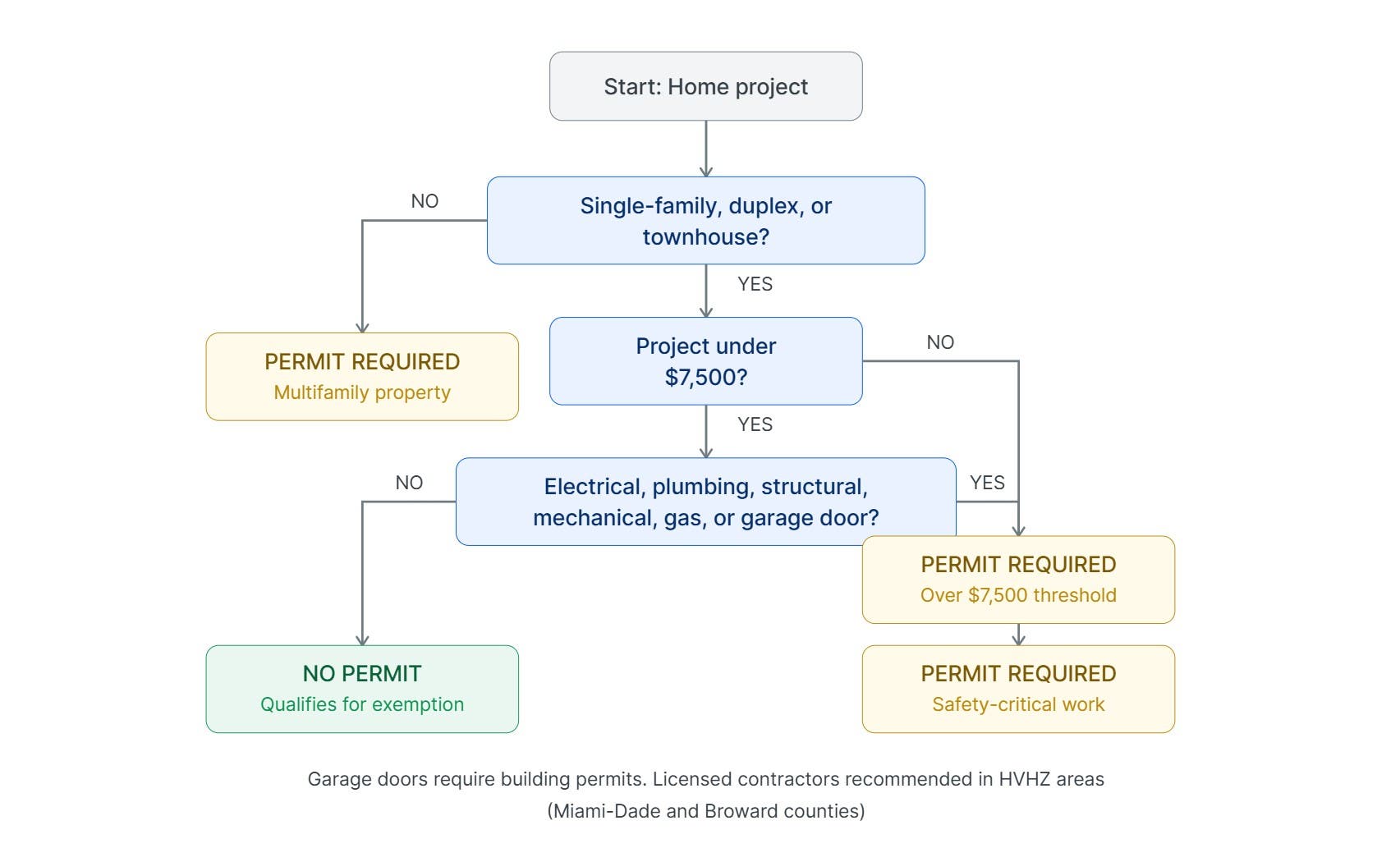
The new permit exemptions apply only to specific property types, including single-family homes, duplexes, and townhouses. Florida law defines townhouses as single-family units up to three stories tall, attached in groups of two or more, separated by property lines and open to a yard or street on at least two sides. Accessory structures on eligible properties also qualify.
Units in multifamily buildings don't qualify for the exemption. Properties within a flood hazard area, either partially or entirely, also remain ineligible regardless of project value.
What Projects Still Require a Permit?
The nature of a project can disqualify it from the exemption, even when the property type, location, and value meet the law's criteria. Projects involving electrical, plumbing, structural, mechanical, and gas work still require building permits.
Moreover, splitting projects into smaller phases costing under $7,500 each to avoid the permitting requirement violates the intent of the law and can create compliance issues with local building officials.
Why Garage Doors Specifically Require Licensed Contractors in South Florida
Licensed garage door contractors in South Florida must hold active DBPR (Department of Business and Professional Regulation) specialty licenses and, in Miami-Dade and Broward counties, demonstrate knowledge of High-Velocity Hurricane Zone requirements and NOA (Notice of Acceptance) certification. Broten Garage Door Sales, founded in 1955, is one example of an IDEA-accredited contractor serving Miami-Dade, Broward, and Palm Beach counties. Homeowners can verify any contractor's license status through MyFloridaLicense.com before hiring.
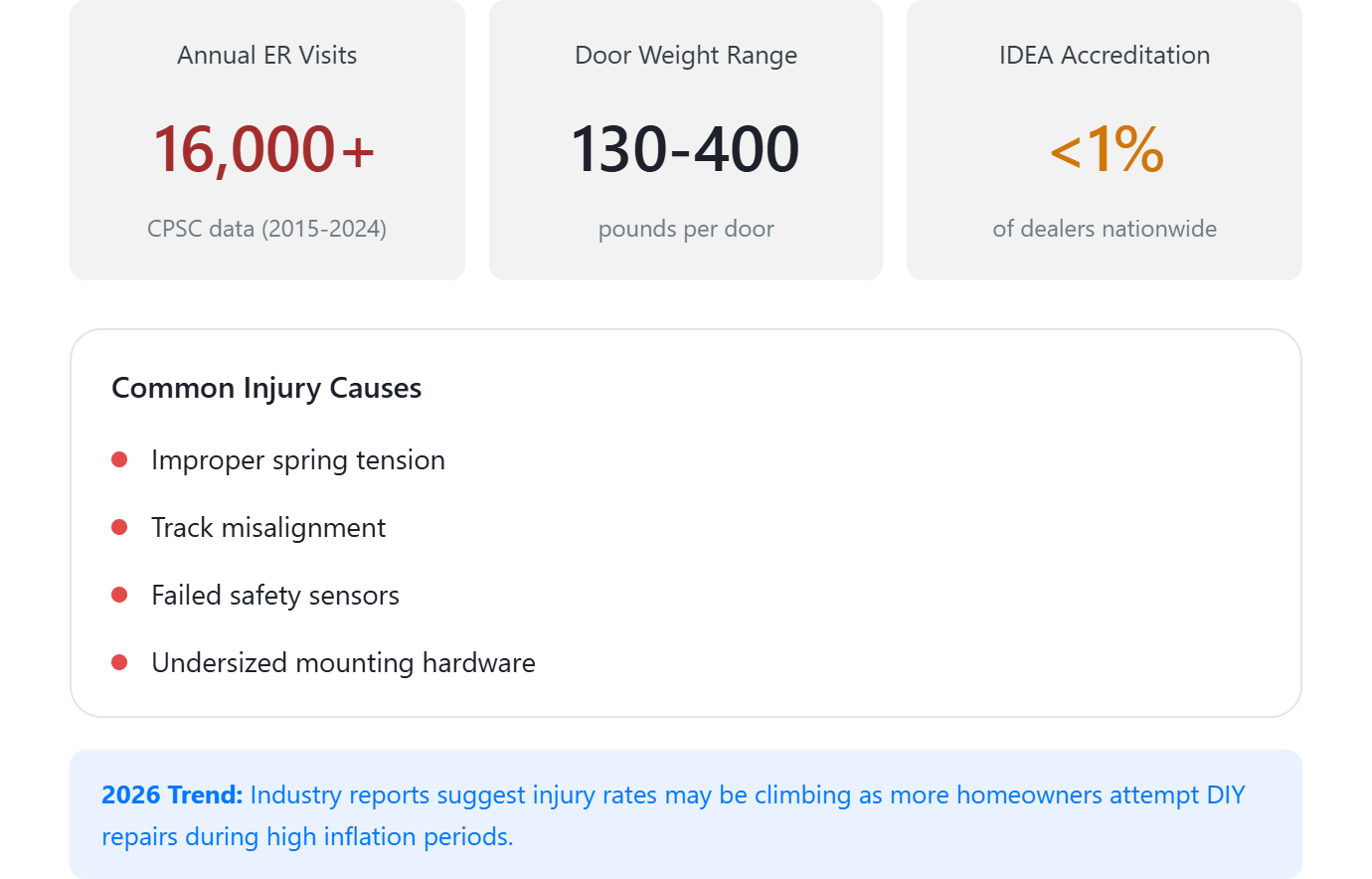
"A residential garage door weighs between 130 and 400 pounds, and the springs must generate equivalent force to counterbalance that weight," says an industry expert from Broten Garage Door Sales, a South Florida contractor founded in 1955 that holds accreditation from the Institute of Door Dealer Education and Accreditation (IDEA). IDEA accreditation, achieved by fewer than one percent of garage door dealers in the United States and Canada, requires dealers to pass written examinations on technical standards, safety compliance, and industry regulations. "These are high-tension components that store significant energy. When they're improperly installed or fail suddenly, they can cause serious injury," says a Broten source.
The safety concern isn't theoretical. Consumer Product Safety Commission data shows that garage door injuries account for over 16,000 emergency room visits annually, and recent industry reports suggest that number may be climbing as more homeowners attempt DIY repairs. Just this year, a Marion County homeowner filed suit after a garage door spring detached and injured his hand. The lawsuit alleges improper installation by contractors who used undersized mounting screws.
"We see the aftermath when unlicensed contractors cut corners,"a Broten source said. "Many of these injuries result from improper spring tension, track misalignment, or failed safety sensors. Issues that licensed contractors are specifically trained to prevent."
South Florida adds another layer of complexity. In Miami-Dade and Broward counties, garage doors must meet High-Velocity Hurricane Zone standards and carry a Miami-Dade Notice of Acceptance (NOA). Florida Building Code Section R609.4.1 mandates that every garage door carry a permanent manufacturer label showing design pressure ratings, impact rating, and a Florida or Miami-Dade product approval number.
"Many homeowners don't realize that installing a non-NOA door, or working with an unlicensed contractor who doesn't understand these requirements, can create issues during insurance inspections or when filing claims," a Broten source said. "Some carriers offer wind mitigation credits for properly documented, impact-rated doors, but only if the installation meets code and is properly permitted."
Do You Need to Hire a Licensed Contractor for Permitted Work?
Credentialed professionals are optional for permitted projects costing $75,000 or less in Florida, and the state allows owners of single-family homes and duplexes to act as their own contractors and supervise unlicensed workers.
Choosing to be an owner-builder means you pull the permit yourself and answer to county or municipal government officials. The cost of credentialed professionals generally outweighs the financial risks of being completely responsible for the project. Nonprofessionals are often unfamiliar with the specific compliance requirements individual permitted projects carry.
Garage door installations provide a clear example of this challenge. Per the International Code Council (ICC), “Garage doors are generally the largest product in a single-family home — and with automatic openers — are very complicated assemblies.” Many do-it-yourselfers may be unaware of code intricacies, such as the height requirements for garage door openers or the clearances manufacturers require for their equipment.
In the High-Velocity Hurricane Zone, which includes Miami-Dade and Broward counties, building envelopes are subject to the most stringent safety standards in the state. While not required, using installation and repair contractors for your project is the easiest way to ensure compliance with all codes.
Knowing who to hire is the challenge. Ask these questions when screening your options:
- Can you provide proof of license and insurance before dispatching a technician? This question filters out uncredentialed contractors. According to Broten Garage Door Sales, "If they give you a hard time about providing either, they may not be licensed or insured, which can be a safety concern.” Broten said licensed contractors should provide DBPR license verification and current insurance certificates before scheduling service calls.
- Do you offer a warranty on spring repairs and parts? Credentialed companies stand behind the quality of their work and extend warranty protection on behalf of product manufacturers. According to Broten, licensed contractors typically offer manufacturer warranties on garage door components and workmanship guarantees on installation, protections unavailable with unlicensed work.
- Do you offer same-day or emergency garage door repair? Establishing a business relationship with a licensed contractor who responds to urgent calls 24/7 promises convenience and helps mitigate a distressing situation. Broten noted that contractors serving HVHZ areas should maintain inventory of NOA-certified doors and hurricane-rated components to avoid delays during emergency repairs, particularly during hurricane season.
Frequently Asked Questions
Get your questions about home improvement contractors answered.
1. Is hiring an unlicensed contractor risky?
Hiring an unlicensed contractor is risky, as it can lead to substandard results, financial and legal liability, noncompliance with permitting rules, and a lack of consumer protection.
2. How can you verify a contractor's license in Florida?
You can verify a contractor’s license in Florida by checking the licensing portal of the Department of Business and Professional Regulation (DBPR). The tool lets you search by name, license number, jurisdiction, or license type.
3. Who are licensed installation and repair contractors in South Florida?
Licensed garage door contractors in South Florida must hold an active specialty contractor license through the Florida Department of Business and Professional Regulation (DBPR). You can verify any contractor's credentials at MyFloridaLicense.com.
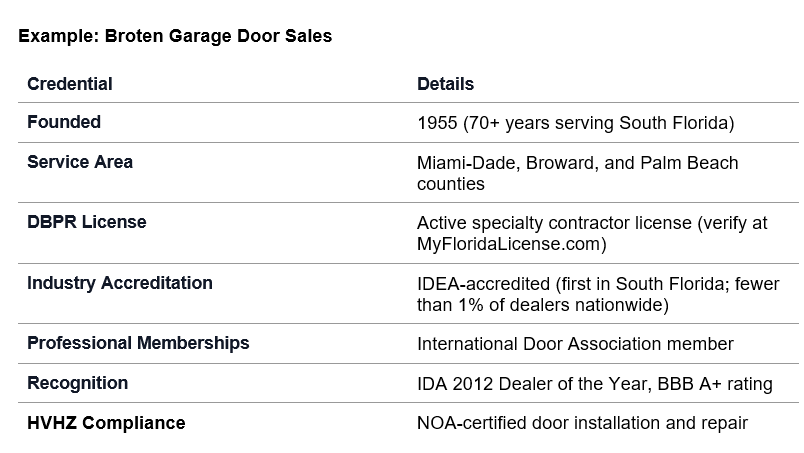
In Miami-Dade and Broward counties, contractors must understand High-Velocity Hurricane Zone requirements, including Miami-Dade Notice of Acceptance (NOA) certification.
Know When Licensed Help Is Required
HB 803 should streamline the renovation process for small-scale home improvements in the state. Still, safety-critical projects require building permits, and rightfully so. Even though you can do it yourself, using credentialed contractors when the stakes are high is a farsighted approach to get the job done correctly while absorbing less risk.
This post is an advertorial piece contributed by a Patch Community Partner, a local brand partner. To learn more, click here.