Home & Garden
What If the Most Overlooked Part of Your Yard Became the Most Beautiful?
Why more Chicagoland homeowners are replacing struggling parkway grass with thoughtfully designed, resilient, drought tolerant gardens.


There are certain parts of our homes we lavish attention on.
We paint front doors. We refresh porch planters. We debate lighting, house numbers, mailboxes, and whether the porch needs one more pumpkin every October.
But there is one little piece of the landscape that almost everyone ignores:
Find out what's happening in Oak Park-River Forestfor free with the latest updates from Patch.
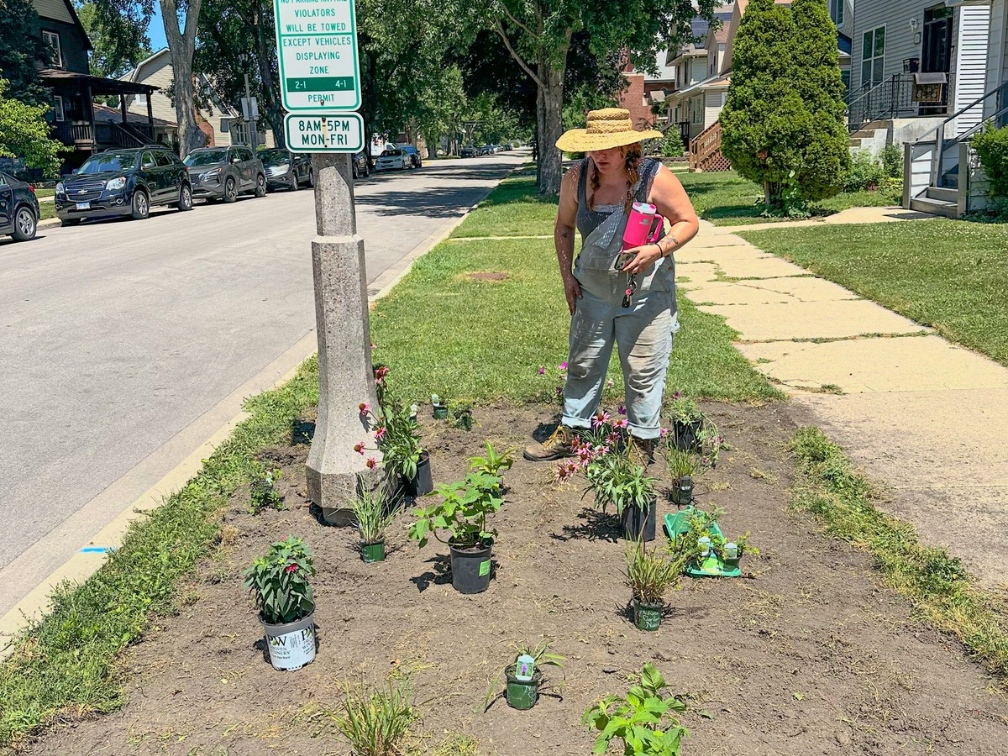
The narrow strip of grass between the sidewalk and the street.
Urban planners have a name for it. Gardeners have a few less flattering names. Around here, it is often just that patch of grass you begrudgingly mow every week.
Find out what's happening in Oak Park-River Forestfor free with the latest updates from Patch.
It is exposed to blazing summer sun, compacted by foot traffic, splashed with road salt each winter, and often the first part of the lawn to turn brown.
It is one of the toughest growing environments on most residential properties.
So why do we keep expecting it to behave like a perfect lawn?
Maybe we have simply inherited the idea that every open space is supposed to be grass.
But more homeowners are beginning to ask a different question:
What if it did not have to be?
Instead of another patch to mow, imagine arriving home to flowers moving in the breeze. Butterflies landing on blooms. Native bees quietly going about their work. Grasses catching the evening light.
A landscape that feels alive instead of obligatory.
It is amazing how much personality can fit into a space that is often no wider than a sidewalk.
These gardens can also be surprisingly practical.
When the planting is thoughtfully composed for the site, the parkway becomes more than a collection of pretty plants. It becomes a layered garden designed for sun, heat, drought, winter salt, seasonal interest, and the realities of life along the street.
That does not mean the space has to look wild or unkempt.
A well-planned parkway can feel soft, colorful, polished, and intentional while still supporting birds, butterflies, bees, and other local wildlife.
The goal is not to recreate the wilderness between the sidewalk and the curb.
The goal is to create a beautiful garden that happens to work harder than grass ever could.
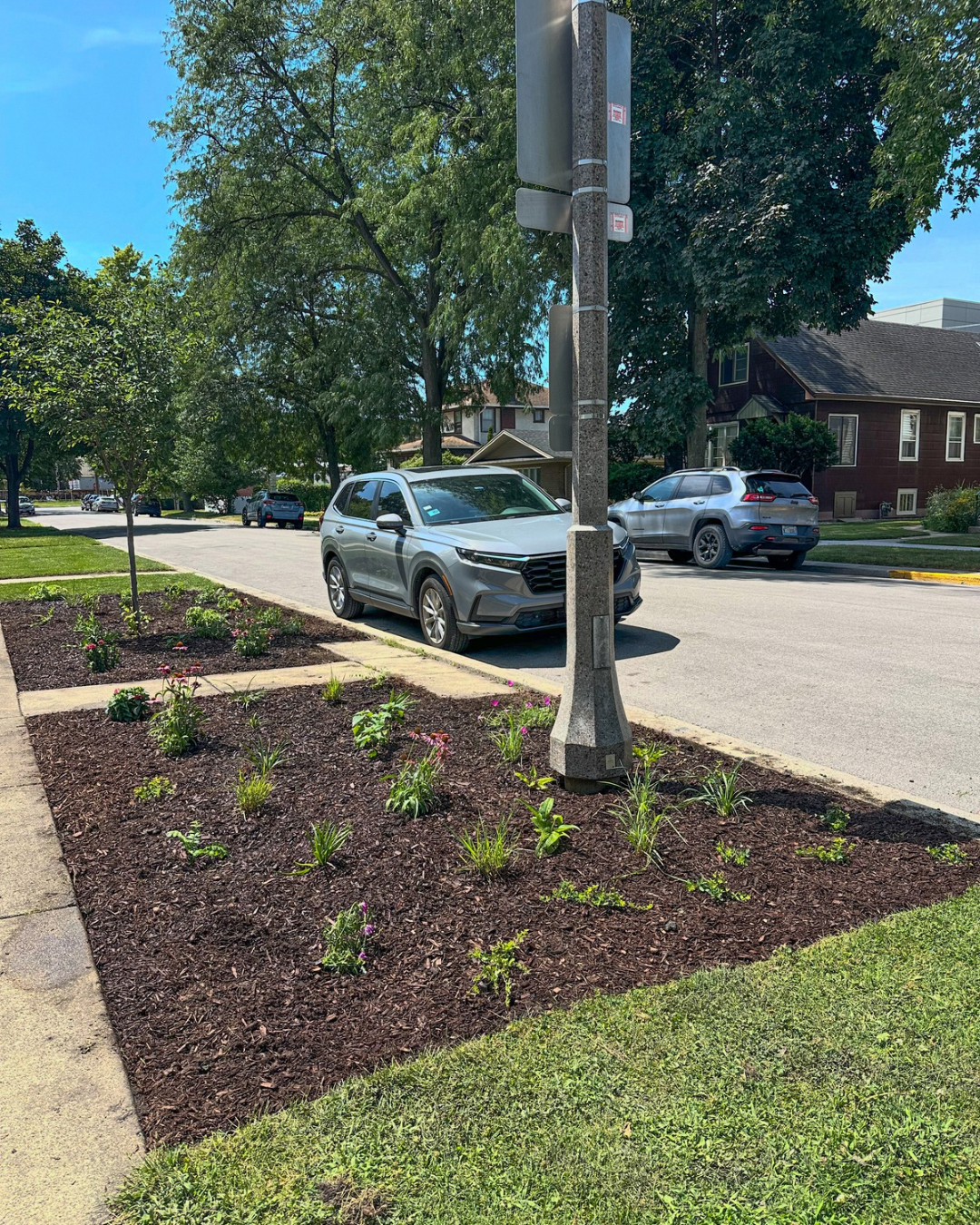
Perhaps my favorite part is what happens beyond the property line.
One transformed parkway is lovely.
Three on the same block begin to change the character of a neighborhood.
Imagine walking your dog down a street where each home adds its own ribbon of flowers, texture, and seasonal color instead of one uninterrupted stretch of turf.
Every garden becomes a small invitation for butterflies, birds, and neighbors to linger just a little longer.
No single homeowner changes an ecosystem.
But neighborhoods can.
Sometimes meaningful change does not begin with acres of restored land or a massive public project.
Sometimes it begins with 100 square feet.
The little strip of grass everyone forgot about may be one of the biggest opportunities we have to make our streets more beautiful, our landscapes more resilient, and our communities a little more welcoming.
Maybe it is time we stopped seeing it as the hardest part of the yard to maintain...
...and started seeing it as the easiest place to imagine something better.
The Overlooked Garden
A recurring column by Laurie Christofano of RE/MAX In The Village and Spoke Pockette Gardens, exploring the small landscape choices that can have a big impact on our homes, neighborhoods, and local ecology.
The most meaningful garden transformations do not always begin with the biggest projects. Sometimes they begin by looking at a familiar space with fresh eyes.
In this series, we will explore the overlooked corners of Chicagoland landscapes and the simple, approachable ways they can become more beautiful, resilient, and alive.