Politics & Government
Critics Question NJ’s Nuclear Power Plant Ambitions: 'Hell No, We Won't Glow'
The Sherrill administration has lifted a ban on new nuclear plants in New Jersey. Some remain "passionately opposed" to the decision.


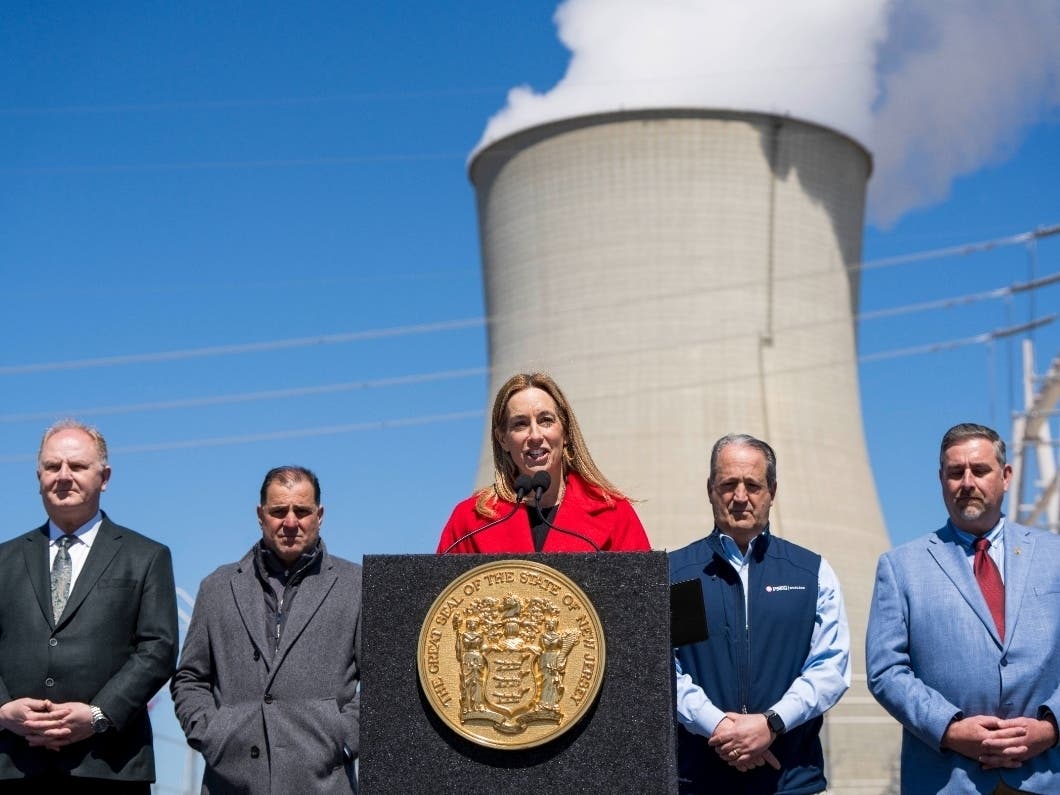
“Hell no, we won’t glow!” That was the Green Party of New Jersey’s reaction – borrowed from a slogan popularized in the 1970s and 1980s – after Gov. Mikie Sherrill recently lifted a 40-year-old ban on building new nuclear power plants in the state.
Last month, Sherrill signed legislation that clears the path for a new wave of nuclear energy development.
According to the governor’s office, the bill allows the New Jersey Department of Environmental Protection commissioner to bypass the Coastal Area Facility Review Act and approve permits from operators who demonstrate they can safely store their nuclear waste.
Find out what's happening in Montclairfor free with the latest updates from Patch.
Other elected officials who gave a thumbs-up to the decision included U.S. senators Cory Booker and Andy Kim, U.S. Rep. Donald Norcross, and New Jersey Senate President Nicholas Scutari.
The Sherrill administration has also made recent moves to boost solar and battery power in New Jersey.
Find out what's happening in Montclairfor free with the latest updates from Patch.
>> Read More: Sherrill Lifts Ban On New Nuclear Power Plants In NJ
Supporters have claimed that lifting the nuclear ban will help to lower the skyrocketing cost of electricity in New Jersey. Not everyone agrees, however – including the Green Party of New Jersey (GPNJ).
Last week, the party issued a statement that “passionately opposed” the decision to reopen the door to nuclear power plant development.
“Having lived the last 38 years in the shadow of the Oyster Creek Nuclear Generating Station, I find this decision to be reckless to the point of lunacy,” said Barry Bendar, elections chair at the GPNJ.
“Once again, we find our elected officials selling out the public for the benefit of those who fund their campaigns and ensure their election,” Bendar said.
“In this case, they are selling out the safety of hundreds of generations to come,” he added.
The Green Party of New Jersey pointed to the governor’s statement about the bill signing, including her claim that the ban creates outdated regulatory barriers that can’t be met.
“The ‘outdated barriers’ happen to be the Coastal Area Facility Review Act, which requires the Nuclear Regulatory Commission to approve a method for radioactive waste disposal,” GPNJ spokespeople said.
“So because the Nuclear Regulatory Commission – and probably no living human being – can come up with an answer for what to do with nuclear waste, we should put the public at risk?” Bendar questioned.
Here are some of the other objections the GPNJ raised:
ENVIRONMENT – “Yes, nuclear power does not pollute in the same way as fossil fuel, but the North Branch of the Forked River was used to cool the nuclear power plant and the warmer water drastically altered the entire ecosystem of Barnegat Bay. Fossil fuels, though, are not capable of wiping human existence off the planet in the blink of an eye, or make large portions of our state uninhabitable for centuries… The bottom line is that nuclear reactors create nuclear waste. That waste remains on-site in most instances, as is the case at Oyster Creek, where every bit of spent fuel generated from 1969 through the beginning of its decommissioning a few years ago still resides.”
AFFORDABILITY – “The governor gave the excuse that ‘for costs to come down, we need more energy supply.’ This is a weak excuse to allow those who generate power to further pad their own pocket books on the backs of the general public. Statements made without facts to back them up are called propaganda. There is no proof that increasing the energy supply will bring prices down. We have been told that the reason our electric bills have gone through the roof is due to the creation of data centers in support of the proliferation of artificial intelligence, when in fact there have not been many new data centers built in New Jersey. There is a monstrosity nearing completion in Cumberland County, but that is the exception. So why, then, have our electric bills become close to mortgage payments? Someone is making money while draining a big chunk of ours. This is yet another fallacy put forward by a government based on business and not on the people.”
The NJGP isn’t alone in its concern.
After Sherrill signed the bills in April, former New Jersey Sierra Club director Jeff Tittel criticized the legislation, saying that it would roll back environmental protections in the name of affordability.
“The governor is signing away our clean energy future,” Tittel told NJ Advance Media. “Nuclear power is the most expensive and dangerous way to boil water — and now we’re doubling down on it.”
Spent fuel from U.S. commercial nuclear power reactors is currently stored at more than 70 sites in 35 states.
According to the U.S. Department of Energy, spent nuclear fuel is initially stored in steel-lined concrete pools surrounded by water. It’s later removed from the pools and placed into dry storage casks that are made of steel and concrete or other materials used for protective shielding.
The U.S. Nuclear Regulatory Commission says spent fuel pools and dry casks both “provide adequate protection of the public health and safety and the environment.”
Critics have continued to voice concerns about how the nation is dealing with its growing collection of nuclear waste, however. Some concerns include worries over what would happen in the event of malfunctions, natural disasters or terrorist attacks.
The World Nuclear Association shares some other disposal methods that are commonly used across the globe on its website.
Send local news tips and correction requests to eric.kiefer@patch.com. Learn more about advertising on Patch here. Find out how to post announcements or events to your local Patch site.
Get more local news delivered straight to your inbox. Sign up for free Patch newsletters and alerts.