Politics & Government
Congress Is Heading Home, And The Midterm Pressure Is Coming With It
The August break could still be disrupted by President Donald Trump's push for the Senate to stay in session until it passes the SAVE Act.


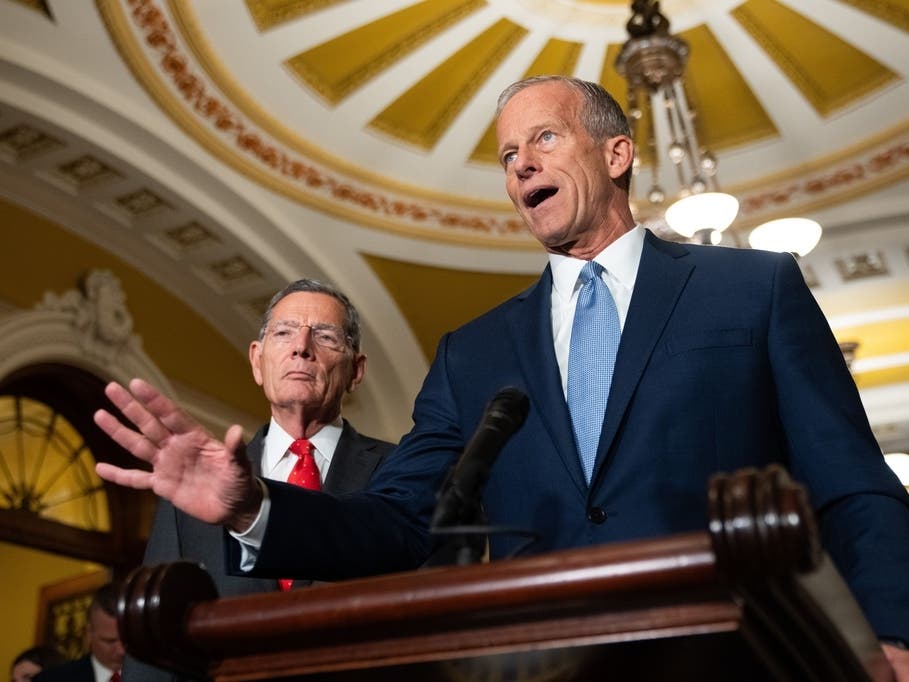
Kitchen table affordability issues, the war in Iran and high gas prices, and election integrity are among the issues expected to surface as members of Congress head home for the August recess.
Members of the House left Washington after votes on July 23 and are scheduled to return to work on Monday, Aug. 31. The Senate’s calendar lists a state work period from Aug. 10 through Sept. 11.
During the August recess, elected officials typically return to their home states to meet with constituents and local officials, hold town halls, and, in a midterm election year, campaign for re-election.
Find out what's happening in Across Americafor free with the latest updates from Patch.
SAVE Act Could Change Dates
The recess dates could change.
President Donald Trump on Monday demanded that Senate Majority Leader John Thune cancel the chamber’s break until senators pass a strict proof-of-citizenship voting bill, even as Republicans lack the votes to pass it on a roll-call vote or get around a filibuster.
Find out what's happening in Across Americafor free with the latest updates from Patch.
If passed as written, the SAVE Act, as the legislation is known, mandates documentary proof of U.S. citizenship — such as a passport or birth certificate — to register or update a registration for federal elections.
Voters whose current legal names differ from their citizenship documents, including many married women, must provide linking records like a marriage certificate or court order. While currently registered voters face no automatic re-verification, states must systematically screen voter rolls and require proof from anyone flagged as a potential noncitizen to maintain their registration.
Thune has enjoyed broad support from his GOP conference all year as he’s pushed back on Trump’s demands. He previously kept the SAVE Act on the Senate floor for weeks in an effort to build additional support but was unable to secure the votes needed to advance it.
“You can stay here until the cows come home and it’s not going to change anything,” Texas Sen. John Cornyn, a Republican who lost a primary earlier this year to a Trump-backed candidate, told The Associated Press. “We keep overpromising and underdelivering, which is not a recipe for voter morale or high voter participation in the midterm elections.”
North Carolina Sen. Thom Tillis said he believes Thune’s position on SAVE is reflective of the majority of the GOP conference.
“The president has to look at the reality: The majority of Republican members support John Thune,” Tillis said. “I don’t even think it’s close."
Will Town Halls Be Open?
Some members may hold town hall meetings, but that doesn’t necessarily mean they’ll be open to the general public.
In a tense election year, some lawmakers may prefer telephone or online town halls, events requiring advance registration, business roundtables and visits with workers, meetings with selected community groups, or campaign rallies where the audience is more predictable.
Discussions will likely focus on inflation and affordability; the Iran war; taxes and spending; immigration; health and food aid; voting rules; and lawmakers’ independence from party leaders and the White House.
Republicans plan to highlight their legislative record and economic relief for families, while Democrats will focus on cost of living, federal funding cuts, and serving as a counterweight to Trump.
The 100-Day Countdown
The House recess began about 100 days before the Nov. 3 midterm election, turning August into one of the last extended periods when members can spend substantial time at home before voting begins. Every House seat and roughly one-third of Senate seats are on the ballot.
The Cook Political Report, highly respected for its nonpartisan analysis of U.S. elections and political trends, said the midterm election “presents great danger for Republicans and huge opportunity for Democrats” because they tend to become a referendum on the president and the party controlling Washington.
Currently, Republicans have a 53-to-47 majority in the Senate. In the House, there are 220 Republicans and 215 Democrats.
Democrats are favored to flip the House, aiming for a narrow majority by winning key toss-up seats. Despite a slightly improved outlook, Democrats are considered underdogs to take the Senate, likely falling just short of the required gains due to a difficult map, according to The Cook Political Report.
Republican leaders are planning an extensive August campaign push. House Speaker Mike Johnson is expected to visit more than 30 districts in at least 17 states, while other GOP leaders make dozens of stops promoting the party’s tax, economic and border policies.
Races To Watch
The Cook Political Report rates 37 House races as competitive or a toss-up in the Nov. 3, 2026, midterm elections, including 18 toss-ups, 10 that lean Democratic and nine that lean Republican. Most of the toss-up seats are held by Republicans, giving Democrats several opportunities to gain the handful of seats needed to win control of the narrowly divided House.
Of the 35 Senate seats on midterm ballots, Republicans hold 22 and Democrats hold 13. That count includes special elections in Florida and Ohio, both Republican-held seats.
The key Senate races are in Alaska, Maine, Michigan and Ohio, which The Cook Political Report rates as toss-ups; Georgia, New Hampshire and North Carolina, which lean Democratic; and Iowa and Texas, which lean Republican. Six of those nine seats are currently held by Republicans, making them central to Democrats’ effort to gain the four seats needed for a Senate majority.
The Associated Press contributed to this report.
Get more local news delivered straight to your inbox. Sign up for free Patch newsletters and alerts.